The problem is acute especially in seven
states, Tamil Nadu being the worst hit, followed by Andhra Pradesh,
Karnataka, Kerala, Odisha and Maharashtra.
The recent Sabarimala episode has proved that too much of political
or judicial interference in matters of faith not only creates chaos in a
deeply religious society like India’s, but also hits at the very root
of secularism that was so close to the heart of the makers of the Indian
Constitution. So is in the case of absolute state control over the
places of worship.
Ironically, in India, the affairs of around 25 lakh mandirs (temples)
and maths (monasteries) belonging to the majority Hindu community are
regulated by various state authorities, whereas the places of worship of
other faiths in the country enjoy absolute freedom as they are owned by
their respective communities and the governments have almost no say in
their rituals and other matters.
It has not only hurt the very secular fabric of the country but also
created a sense in the mind of the majority community that they are
being persecuted in their own land even after Independence. Not for no
reason. Hindu leaders rightly point out that the Hindu Religion and
Charitable Endowment (HRCE) Act, 1951, is discriminatory in nature as it
applies to Hindu religious places alone.
The Act has no doubt its roots in our colonial past as it was first
enacted in 1925 by the then British rulers to serve their imperial
purposes. But when it was refurbished and re-promulgated in 1951, Hindus
thought that irrational clauses in it would be done away with and other
religions would also be covered under it. But it turned out to be even
more draconian than its original colonial form.
When the constitutional validity of the Act was challenged, the
Supreme Court dubbed it unconstitutional and struck it down outright.
But after reorganisation of the southern states, the then Tamil Nadu
government reintroduced it in 1959 as a provincial law, with other
states following suit. All these laws have been challenged in various
courts all over the country many times in the past, but to no avail.
Two basic questions have been raised all through: 1. If India is a
“secular” country and secularism means “dharm nirapeksh” where the state
purports to be officially neutral in the matters of religion supporting
neither religion, then why the state apparatus is trying to control
religious affairs; and 2. even if it is to be done and secularism means
“sarva dharm samabhava” where the state intends to have equal respect
for all religions and treat them all at par, then why state power is
targeting Hinduism alone.
While the state argues that its intervention is necessary to bring
about social welfare and reform as well as to correct historical social
inequities, many view this kind of selective interference as aimed at
“reforming the religion out of its existence”. They say usurpation of
Hindu endowments alone is against all tenets of what constitute a
“principled separation” between the state and the religion.
They also hold that singling out a particular religion violates not
only the very secular spirit of the Indian Constitution but also the
basic rights guaranteed under it. They opine that the HRCE Act infringes
upon Article 25 of the Constitution, which guarantees the citizens
their fundamental right to profess, practice and propagate their
religion, as well as establish and manage their religious institutions.
They point that while this right is very much available to followers
of all other religions in the country, only Hindus have been constrained
by the law.
In fact, the state governments have assumed total financial and
managerial control over lakhs of Hindu temples across the country
through their respective HRCE Acts, accusing their administrations of
mismanagement of funds.
However, no other religious institution (barring Jains’ as, by legal
definition, they are Hindus)—churches, mosques, gurudwaras, pagodas and
synagogues belonging to Christians, Muslims, Sikhs, Buddhists and
Parsis, respectively— has been brought under the Acts despite similar
allegations cropping up there too.
“Shall we assume that the state governments believe that Hindus have
poorer and lower standards of ethics and values than Indians of other
religious denominations? Or is it that in a ‘secular’ India, religious
minorities cannot be touched, while Hindu institutions, and of course
the donation money they attract, are considered easier to be meddled
with?” asks a lawyer-activist from Tamil Nadu who is fighting many legal
battles for this cause.
The fact of the matter is that in all these decades that Hindu
religious institutions have been under the thumb of the HRCE
departments, the ability of the Hindu community as a whole in managing
its own institutions has been systematically clipped and pared down.
The problem is acute especially in seven states, Tamil Nadu being the
worst hit, followed by Andhra Pradesh, Karnataka, Kerala, Odisha and
Maharashtra.
To top it all, fresh controversies have now erupted on two more
fronts—the regulatory bodies controlling Hindu endowments having
non-Hindus as members and giving non-Hindus right to enter the premises
of Hindu religious places. Recently, the Communist government in Kerala
amended Section 29(2) of Travancore-Cochin Hindu Religious Institutions
Act, 1950.
The Section had made it mandatory that only Hindus could be appointed
on the Travancore-Cochin Devaswom Boards (TCDBs), but now the amendment
has paved the way for induction of non-Hindus too into them.
Even otherwise, the board already has an atheist—CPM leader A. Padma
Kumar—as the chief of Travancore Devaswom Board. Other TCDBs are also
now open to individuals who do not subscribe to the values of Hinduism.
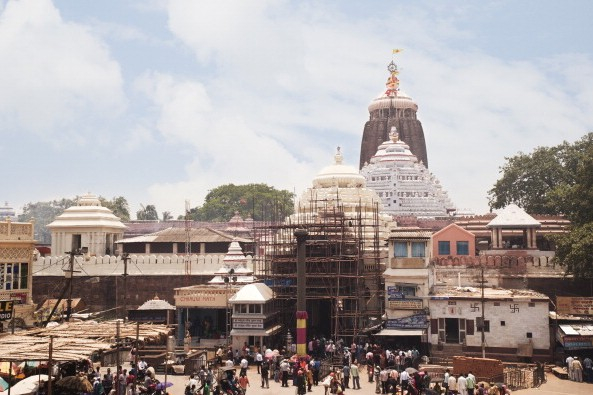
Similarly, the Supreme Court recently asked the management of
Jagannath temple in Odisha to examine if non-Hindus can be allowed to
enter the hollowed precincts as long as they follow the shrine’s dress
code and traditions. This has sent alarm bells ringing in the majority
community. To pre-empt such a move, a case has been filed in Kerala High
Court this week seeking direction to ban entry of non-Hindus into
Sabarimala temple.
The properties belonging to one religious community being accessed or
managed by the members of other religious communities certainly goes
against the basic tenets of the Indian Constitution. Moreover, targeting
only Hindu religious institutions in the name of secularism has given
rise to widespread resentment in the majority community. No doubt, anger
is simmering among the Hindus across the country against the
“injustices” meted out to them in their own country.
(To be concluded)
https://www.sundayguardianlive.com/news/state-control-temples-failing-secularism-india